Fertile Ground Brazil Series
Painting with the Land Itself
A Contemporary Homage to the
Fertile, Rich and Sacred Territory
Like Miningā¦
Historical Background: A Letter to the King
Brazil, a Fertile Soil from the Beginning
Fertile Ground Brazil is a series rooted in the very first written impressions of the land that would become Brazil. When Portuguese navigators arrived in 1500, chronicler Pero Vaz de Caminha famously wrote to the King of Portugal that in this territory āeverything that is planted grows and flourishes.ā That early observationāhalf marvel, half prophecyāhas echoed through centuries of history, shaping the global image of Brazil as a land of abundance, promise, and inexhaustible fertility.
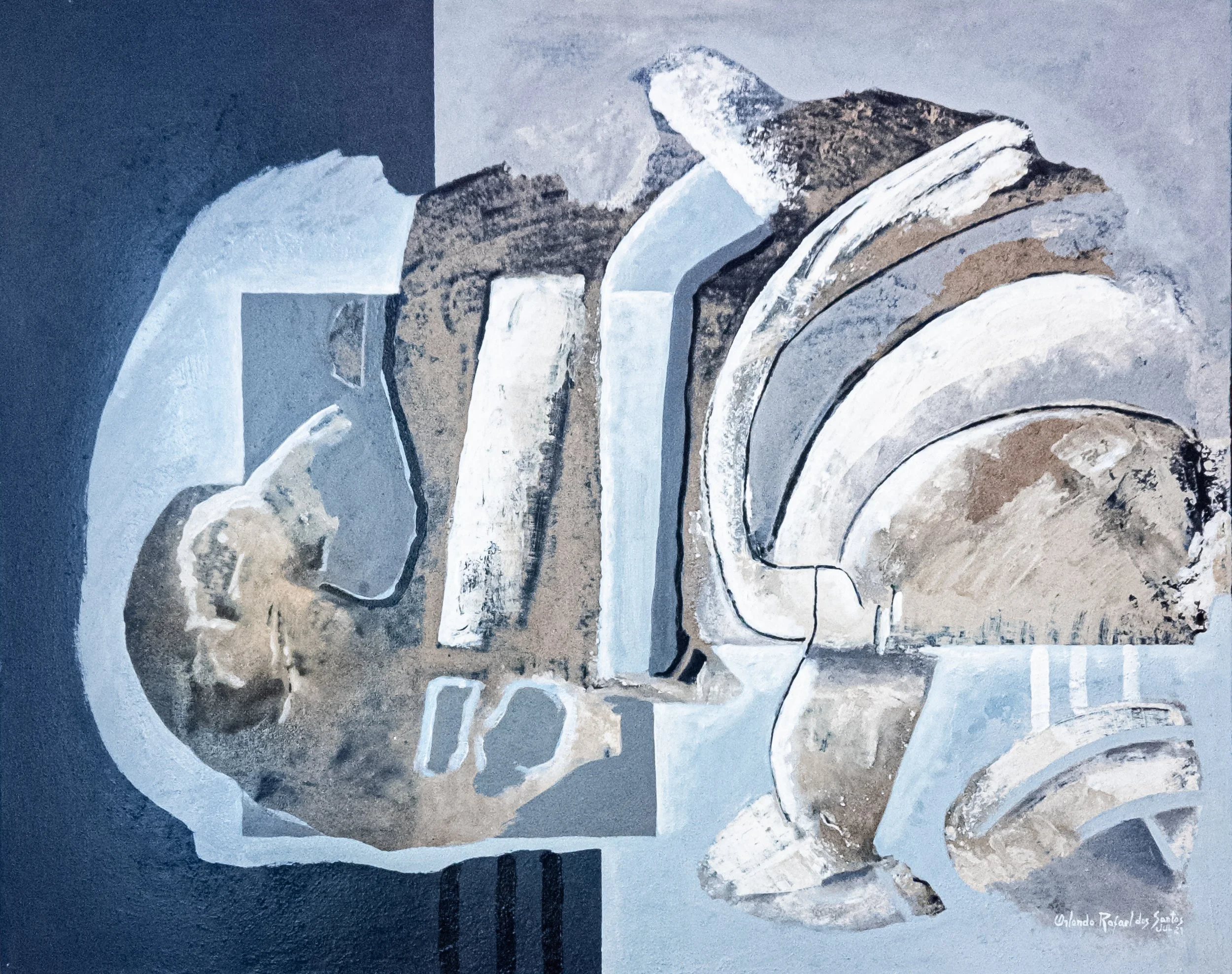
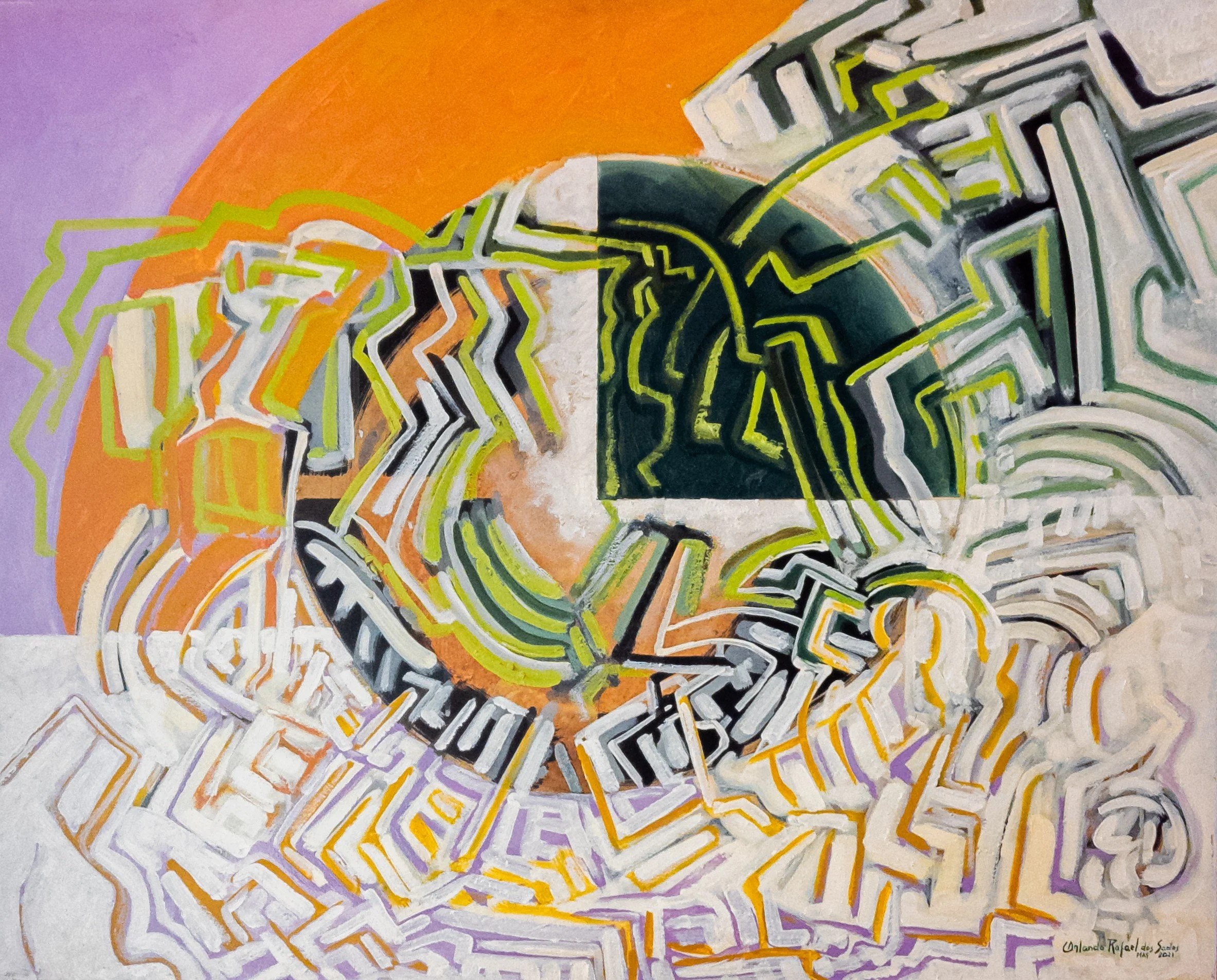
Created by Brazilian artist Orlando Rafael, of Dutch and Indigenous Brazilian descent, the series revisits that foundational moment through a contemporary artistic language. Across 29 paintings, Rafael incorporates earth, dust, clay, and stone taken from Brazilian soil into acrylic and resin, turning the physical ground of the country into the very substance of the work. What once inspired wonder in early explorers becomes, here, a tactile and visual reality: the land itself speaks.
The paintings operate as both homage and reflection. They honor the historical narrative of Brazil as a place āready to bear fruit,ā while also confronting what that fertility has meant across timeāfrom colonial desire and agricultural expansion to modern industry, mineral extraction, and technological development. Since antiquity, earth and pigments drawn from it have carried sacred value, used in ritual, burial, architecture, and art. In Rafaelās hands, these same materials bridge eras: from humanityās earliest reverence for soil to todayās reliance on subterranean resources that fuel economies and define nations.
Each canvas becomes a terrain in its own right, layered with sediment-like textures and earthy chromatic fields. Gesture and material merge, suggesting cultivation, erosion, growth, and transformation. The works do not simply depict fertility; they enact it, converting raw ground into luminous surfaces charged with cultural, historical, and symbolic weight.
Fertile Ground Brazil ultimately frames the countryās soil as a continuous protagonist in its storyācelebrated from the first colonial letter to the present day, when land remains both sacred inheritance and strategic resource. The series proposes that Brazilās fertility is not only botanical or geological, but also imaginative: a source of memory, identity, and ongoing creation, embedded in the ground from the very beginning.
The Process: Making Dust and Ground Pigments Ready to Paint
In The Fertile Ground Brazil series, the paintings begin not in the studio, but in the land itself. Soil, clay and mineral fragments are gathered and reduced to their most elemental state through two quiet but essential processes: decantation and sifting.
Decantation refines the material through water. The raw earth is immersed and agitated, allowing weight and density to separate naturally. Heavier particles settle; finer sediments remain suspended before slowly descending. The water becomes both agent and mediator, drawing out a subtle spectrum of tonal variation. Once dried, what remains is a remarkably fine, velvety dust ā mineral matter clarified by time and gravity.
Sifting, by contrast, is a dry articulation of the same intention. The earth is passed through increasingly fine meshes, isolating particles by scale and texture. The gesture is tactile and direct: a filtering of substance that reveals gradations otherwise invisible to the eye. Each stage yields a distinct refinement of pigment ā from granular residue to near-powdered luminosity.
For Orlando Rafael, these processes were not merely preparatory but formative. Each method produced a refined matter capable of being fused with acrylic paint and resin, allowing the soil itself to enter the pictorial surface without losing its integrity. Because both procedures relied fundamentally on water ā as diluent, separator, and conductor ā fluidity became embedded in the material logic of the work. Sedimentation, suspension, absorption: these physical states subtly informed the dynamics of the final compositions.
The paintings, therefore, do not simply depict earth; they are materially constituted by it. The refinement of dust into pigment, and pigment into surface, mirrors the broader conceptual arc of the series ā transforming ground into image, territory into presence.
ā¦to the Wallsā¦
FERTILE SOIL, 2021
Ground pigments, acrylic paint and resin on canvas
80 Ć 100 cm
ODDS, 2021
Ground pigments, acrylic paint and resin on canvas
80 Ć 100 cm
DUST AND BLUE, 2021
Ground pigments, acrylic paint and resin on canvas
80 Ć 100 cm
WHAT DO YOU MEAN?, 2021
Ground pigments, acrylic paint and resin on canvas
80 Ć 100 cm
The 1st Exhibition of the FERTILE GROUND BRAZIL SERIES
was in the TOP VIA Studio, in Nova IguaƧu, Rio de Janeiro - 20, 21 and 22 October 2021
Highlights from the Exhibition:
3D
CONTEMPORARY
Nova IguaƧu / Rio
2018 / 2019